Many of you have heard some
of us talking about packet radio. For the "OM's" they
may think "That's
so old, and I tought packet died!" Well, not really.
Sure there is
other stuff out there that is "better?", but, packet
radio is getting a
good makeover, and is a great "last mile" messaging
system. Interested?
read on...this page is going to give you tips, links,
setup and the
in's and out's of what's new in packet radio!
First, the title says "sound card" packet radio...I thought you had to have a TNC? You do..your computer has a fancy DSP TNC built right in. No, it's not your modem...it's your sound card! With a neat little piece of software called "AGWPE" your sound card can be a TNC for packet (among other things!)
Second...did you know you can send email to an internet address via packet radio? You sure can. There are some "telnet" nodes around that connect to the WinLink system and allow you to send AND recieve email messages! All you do is connect, send or receive a message and..well, that's it.
Third...did you know you can send small files via packet radio? There are some really neat add ons to a program called WinPack that allow you to receive htlm web pages, jpg pictures, and text files with no problem.
Fourth...and of course there is the BBS system...for the "newcomer" BBS means Bulletin Board System. But with a new twist. You own station can have a PMS! (nope, not the stuff your wife or girlfriend has, a Personal Message System!) Works just like the old BBSs.
Now...still interested? Well, let's dive into the "what does it take"...
You will need the following:
A good 2M mobile radio capable of 25W or more output that is stable on frequency. You will not need CTCSS tones.
A reasonably fast computer (I am running a 1.8GHz processor with 756MB memory and Windoze 98SE.)
A sound card interface (don't worry, you can build one cheap, diagram to follow...)
Software
OK the radio and computer are self explanitory. So let's look at the interface needed.
The interface has to do the following...connect the autio output of the rig to the LineIn of the computer and the Line Out or Speaker Out of the computer to the audio in or mic jack of the radio. It also needs to provide a circuit to key radio using the serial port of the computer. So here you go...
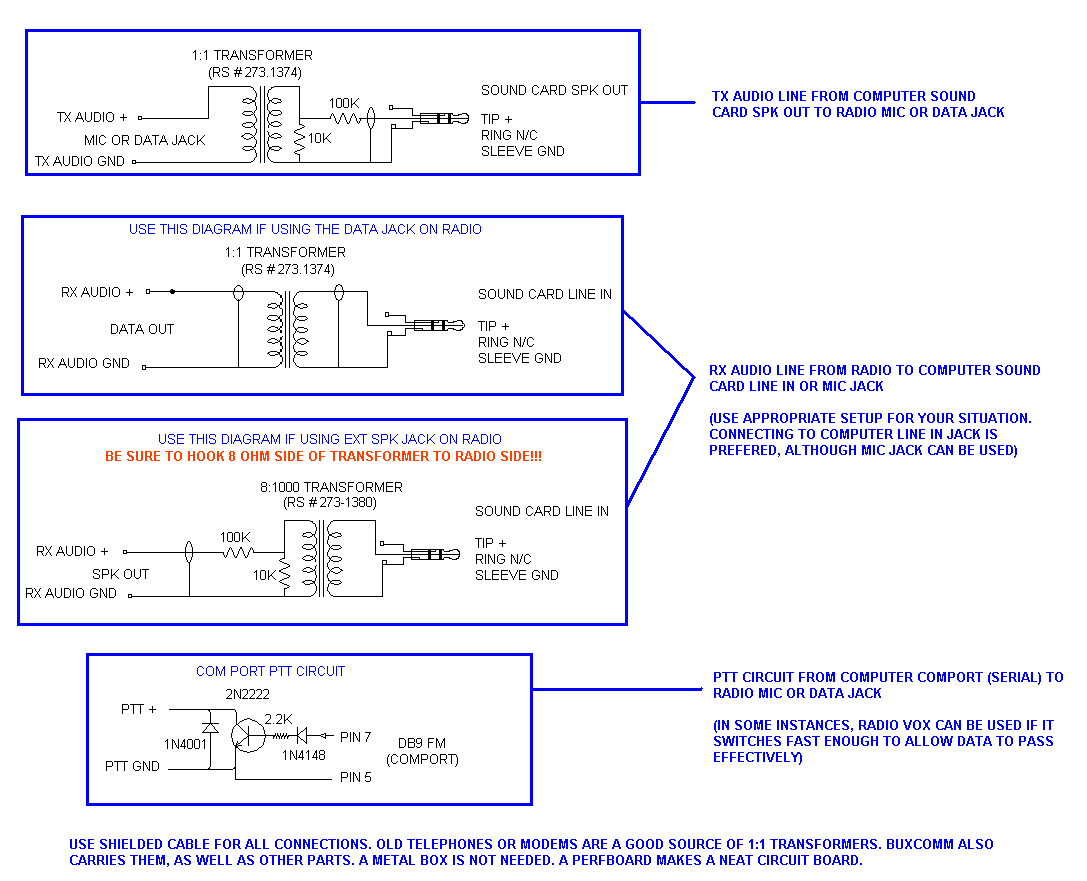
For the audio lines, just build a set of cables to go from the rig to the computer as described above. For VHF and UHF isolation transformers are not needed. Build the cable so they use the "left" side of the sound card, in other words, wire only the "tip" and "sleeve" of the plugs going to the computer. If you need ideas, see http://www.kc2rlm.info/soundcardpacket/
Now for the software. Download the following file:
http://www.sv2agw.com/downloads/agwpe.zip
Once you have done that, unzip (install) AGWPE. Crank it up. Click the little twin tower Icon at the bottom right of your screen and select "Properties" and "New Port". A message window will appear: "A New TncPort File Has Been Created". Click OK to go to this setu screen:
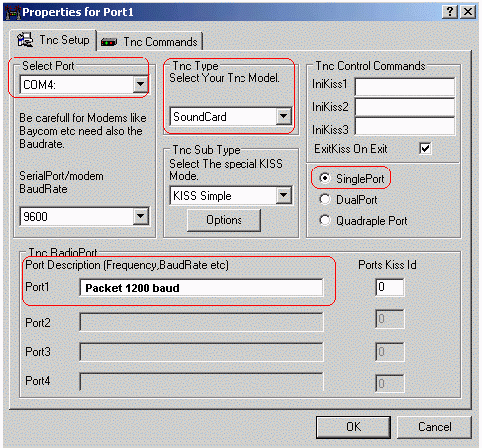
Setup your comport, and choose "SoundCard" for TNC Type. Select Single Port and put a description in the Port Description box. When you select SoundCard, you will probably get this screen:
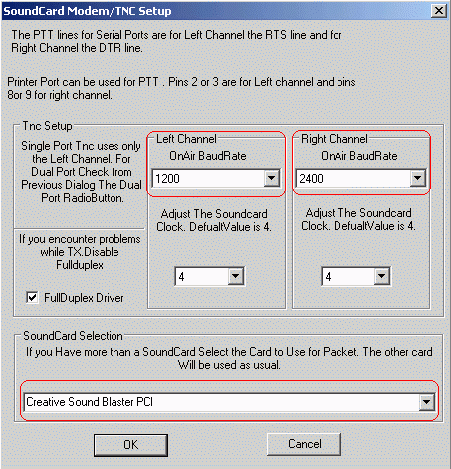
Self explanitory as to how to set up this one...all you really need to do if you only have one sound card is hit OK...
Hit OK until it asks you to Restart AGWPE and then click the twin tower icon and select exit. You will need it running
to fuction as a sound card TNC.
One of the softwares we recommend is Outpost Packet Massage Manager. It is located at http://www.outpostpm.org/.
There are help files on that site you can use to get it set up and running. It can also be used with regular hardware TNCs.
If you wish to use the Winlink Packet RMS system, we recommend RMS Express, found on http://www.winlink.org.
It will not use AGWPE directly, but you can use it by following the instructions on this page: http://www.soundcardpacket.org/PDF/Linking%20AGWPE%20to%20RMS%20Express.pdf
We recommend using the TNC-X KISS hardware TNC for RMS Express packet connections. (http://www.tnc-x.com/)
Our "local" packet frequency is 145.550.
Local stations on are:
KG4FZR-1 Mailbox (The MCARC Club Shack)
KG4FZR-10 WL2K RMS Packet Server
KG4KII-1 (Meigs Co ACS Mailbox)
KE4ACS-1 (The Bradley County ACS group mailbox)
WM4RB-10 WL2K RMS
Other stations are coming online. 145.550 will be used accross the Homeland Security District 3 as a digital EMCOMM frequency, but all are invited to use it for daily chats, practice and training.
Local Digipeaters and Nodes:
MCARC Digi (McMinn County Amateur Radio Club)
KG4FZR-7 Node (McMinn County Amateur Radio Club)
KE4ACS-11 / BRADTN Digi (Bradley County Auxilary Communications Service)
KE4ACS-5 Node (Bradley County Auxilary Communications Service)
KE4ACS-7 Node (Bradley County Auxilary Communications Service)
KG4KII-11 / MEIGTN (Meigs Co ACS)
W4GZX / CARC Digi (Cleveland Amateur Radio Club)
First, the title says "sound card" packet radio...I thought you had to have a TNC? You do..your computer has a fancy DSP TNC built right in. No, it's not your modem...it's your sound card! With a neat little piece of software called "AGWPE" your sound card can be a TNC for packet (among other things!)
Second...did you know you can send email to an internet address via packet radio? You sure can. There are some "telnet" nodes around that connect to the WinLink system and allow you to send AND recieve email messages! All you do is connect, send or receive a message and..well, that's it.
Third...did you know you can send small files via packet radio? There are some really neat add ons to a program called WinPack that allow you to receive htlm web pages, jpg pictures, and text files with no problem.
Fourth...and of course there is the BBS system...for the "newcomer" BBS means Bulletin Board System. But with a new twist. You own station can have a PMS! (nope, not the stuff your wife or girlfriend has, a Personal Message System!) Works just like the old BBSs.
Now...still interested? Well, let's dive into the "what does it take"...
You will need the following:
A good 2M mobile radio capable of 25W or more output that is stable on frequency. You will not need CTCSS tones.
A reasonably fast computer (I am running a 1.8GHz processor with 756MB memory and Windoze 98SE.)
A sound card interface (don't worry, you can build one cheap, diagram to follow...)
Software
OK the radio and computer are self explanitory. So let's look at the interface needed.
The interface has to do the following...connect the autio output of the rig to the LineIn of the computer and the Line Out or Speaker Out of the computer to the audio in or mic jack of the radio. It also needs to provide a circuit to key radio using the serial port of the computer. So here you go...
For the audio lines, just build a set of cables to go from the rig to the computer as described above. For VHF and UHF isolation transformers are not needed. Build the cable so they use the "left" side of the sound card, in other words, wire only the "tip" and "sleeve" of the plugs going to the computer. If you need ideas, see http://www.kc2rlm.info/soundcardpacket/
Now for the software. Download the following file:
http://www.sv2agw.com/downloads/agwpe.zip
Once you have done that, unzip (install) AGWPE. Crank it up. Click the little twin tower Icon at the bottom right of your screen and select "Properties" and "New Port". A message window will appear: "A New TncPort File Has Been Created". Click OK to go to this setu screen:
Setup your comport, and choose "SoundCard" for TNC Type. Select Single Port and put a description in the Port Description box. When you select SoundCard, you will probably get this screen:
Self explanitory as to how to set up this one...all you really need to do if you only have one sound card is hit OK...
Hit OK until it asks you to Restart AGWPE and then click the twin tower icon and select exit. You will need it running
to fuction as a sound card TNC.
One of the softwares we recommend is Outpost Packet Massage Manager. It is located at http://www.outpostpm.org/.
There are help files on that site you can use to get it set up and running. It can also be used with regular hardware TNCs.
If you wish to use the Winlink Packet RMS system, we recommend RMS Express, found on http://www.winlink.org.
It will not use AGWPE directly, but you can use it by following the instructions on this page: http://www.soundcardpacket.org/PDF/Linking%20AGWPE%20to%20RMS%20Express.pdf
We recommend using the TNC-X KISS hardware TNC for RMS Express packet connections. (http://www.tnc-x.com/)
Our "local" packet frequency is 145.550.
Local stations on are:
KG4FZR-1 Mailbox (The MCARC Club Shack)
KG4FZR-10 WL2K RMS Packet Server
KG4KII-1 (Meigs Co ACS Mailbox)
KE4ACS-1 (The Bradley County ACS group mailbox)
WM4RB-10 WL2K RMS
Other stations are coming online. 145.550 will be used accross the Homeland Security District 3 as a digital EMCOMM frequency, but all are invited to use it for daily chats, practice and training.
Local Digipeaters and Nodes:
MCARC Digi (McMinn County Amateur Radio Club)
KG4FZR-7 Node (McMinn County Amateur Radio Club)
KE4ACS-11 / BRADTN Digi (Bradley County Auxilary Communications Service)
KE4ACS-5 Node (Bradley County Auxilary Communications Service)
KE4ACS-7 Node (Bradley County Auxilary Communications Service)
KG4KII-11 / MEIGTN (Meigs Co ACS)
W4GZX / CARC Digi (Cleveland Amateur Radio Club)